
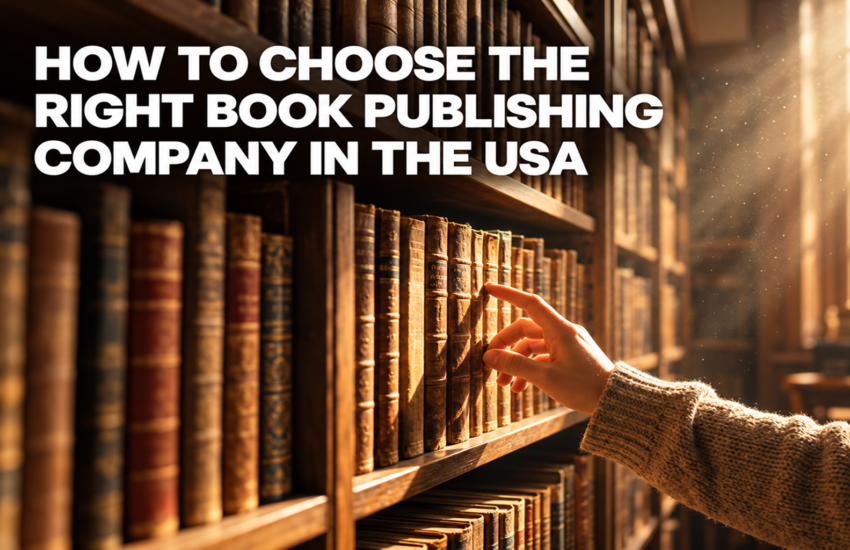
You’ve written a book, or you’re getting close to finishing one. Now comes an important decision: who should help you bring that manuscript to readers?
Searching for a book publishing company in the USA can quickly become overwhelming.
You may encounter traditional publishing houses, self-publishing platforms, hybrid publishers, and companies offering professional publishing services. Each operates differently, and the wrong choice can lead to unexpected costs, confusing contracts, or disappointing results.
So, how do you choose a book publishing company that actually fits your needs?
The answer starts with understanding the publishing model, comparing services carefully, and knowing which questions to ask before signing an agreement.
Understand What Type of Publishing Company You’re Considering
Not every company using the word “publishing” offers the same service.
Traditional publishing houses generally acquire books they believe fit their editorial and commercial goals. They typically invest in producing and distributing those books and compensate authors under publishing contracts.
Self-publishing platforms provide the tools and infrastructure for eligible authors to publish independently.
Publishing-service companies offer paid assistance with tasks such as editing, cover design, formatting, distribution setup, and marketing.
Hybrid publishing involves arrangements that combine aspects of different models, but standards and contracts vary considerably.
Before evaluating a company, determine which model it uses.
This affects who pays, who owns the rights, who controls publishing decisions, and how revenue is handled.
1. Evaluate the Company’s Publishing Services
Start by identifying what you actually need.
If you’ve already completed a professionally edited manuscript, you may only need design, formatting, and distribution support.
If your manuscript requires substantial improvement, professional editing may be a higher priority.
Some authors may also need help developing a book description, understanding ISBN requirements, or preparing digital publishing files.
When comparing providers, ask for a written description of each service.
For example, “book editing” should not be treated as a vague promise. It is important to know whether the company provides developmental editing, copyediting, proofreading, or a specific combination.
Clear deliverables make services easier to evaluate.
2. Review Actual Published Work
A company’s portfolio can provide useful insight into its production standards.
Where possible, examine genuine books associated with the company.
Look at the readability of interior pages, cover design quality, consistency of formatting, and overall presentation.
If you write science fiction, it may be especially useful to look for experience with fiction genres.
If you’re developing a business book, examine whether the provider understands professional nonfiction presentation.
Author testimonials may also be useful, particularly when they identify verifiable projects and explain the author’s experience.
Remember that attractive promotional graphics are not a substitute for evaluating actual published books.
3. Understand Book Ownership and Publishing Rights
Ownership is one of the most important issues in any publishing agreement.
Before signing, ask whether you retain copyright in your manuscript and which rights, if any, you are assigning or licensing.
You should also understand who controls the publishing accounts, who holds the ISBN, and what happens if you later move to another service provider.
Consider this example.
An author hires a publishing-service company to prepare a paperback edition. A year later, the author wants to publish a revised edition through another provider.
The ability to do so smoothly may depend on copyright arrangements, access to production files, ISBN ownership, and contractual restrictions.
These details should be clarified before the project begins, not after a disagreement.
4. Compare Publishing Packages Carefully
Publishing packages can look similar while offering very different deliverables.
One package might include copyediting, a cover design, print formatting, and basic distribution setup.
Another might include only formatting and publication assistance.
Compare the specific work included rather than the number of services advertised.
Ask whether revisions are included, whether there are extra charges for additional formats, and what happens if the manuscript changes during production.
Also confirm what is delivered at the end of the project.
Do you receive the final files? Will you have access to relevant publishing accounts? Are there any ongoing fees?
Transparent answers help you understand the actual value of the service.
5. Ask About Distribution
Distribution determines where your book can be made available for purchase or ordering.
Some companies focus on particular online retailers. Others may help authors prepare titles for wider distribution networks.
However, there is an important difference between being listed as available through a distribution system and being stocked on bookstore shelves.
A company should explain precisely what its distribution service includes.
For example, if a provider promises bookstore distribution, ask whether that means retailer ordering availability or an actual placement commitment.
Do not assume that distribution access guarantees sales, physical shelf space, or promotional support from retailers.
6. Understand Royalties and Revenue
The financial arrangement should be clear before publication.
Ask how book sales revenue is calculated, whether the company receives an ongoing share, and which platform or printing deductions apply.
Also confirm when sales reports become available and how payments are handled.
For an assisted self-publishing arrangement, determine whether the service fee is separate from future sales revenue or whether ongoing fees apply.
A clear contract should explain these matters without relying on ambiguous phrases such as “maximum royalties” or “full earning potential.”
7. Evaluate Communication and Project Management
Publishing is a multi-stage process.
You may need to review editorial changes, approve the cover, inspect formatted proofs, and confirm distribution details.
A reliable provider should be able to explain its process and identify when your input will be required.
Ask who your primary contact will be, how revisions are managed, and what happens if the project schedule changes.
Communication quality often becomes particularly important when problems arise.
A well-defined workflow can reduce confusion and unnecessary delays.
8. Recognize Common Publishing Red Flags
Be cautious of claims that sound too good to be true.
Promises of guaranteed bestseller status, guaranteed sales, or assured bookstore placement deserve careful scrutiny.
Other potential warning signs include pressure to sign immediately, unclear rights terms, unexplained additional fees, or refusal to specify deliverables.
A paid publishing service is not automatically illegitimate. The important distinction is whether the provider clearly explains the business model and delivers what the author agrees to purchase.
Authors should approach every agreement with realistic expectations.
A Practical Example: Comparing Two Publishing Offers
Imagine a first-time novelist reviewing two offers.
Company A advertises an attractive package price but provides few details about editing, file ownership, and distribution.
Company B provides an itemized proposal explaining the editing level, cover design revisions, formatting deliverables, distribution arrangements, and publishing rights.
Even if Company B costs more, the second proposal provides greater transparency.
This doesn’t automatically make it the better provider, but it gives the author more useful information for making a decision.
Explore Professional Book Publishing Services at Publishing Republic
Choosing a publishing partner begins with understanding your manuscript and goals.
Publishing Republic offers professional book publishing services for authors exploring assistance with their publishing projects.
Whether you’re preparing your first novel, a memoir, or an educational book, discussing your needs can help clarify which services to consider.
Planning to publish your book? Contact Publishing Republic to discuss your manuscript and request details about the available publishing services.
Frequently Asked Questions
How do I find a reliable book publishing company?
Review the company’s business model, published work, service details, contract terms, rights arrangements, and verifiable client feedback.
Do I need a publishing company to publish my book?
Not necessarily. Authors can self-publish independently, although professional assistance may be useful for editing, design, formatting, and other tasks.
Should a book publishing company guarantee sales?
No reputable provider can reliably guarantee commercial success. Results depend on reader demand, distribution, marketing, book quality, and other factors.
Can I keep my copyright when working with a publisher?
Ownership depends on the publishing model and contract. Review rights clauses carefully before signing.
What should I ask before paying for publishing services?
Ask about deliverables, timelines, revision policies, payment terms, distribution arrangements, intellectual property rights, and ongoing fees.
Final Thoughts
Choosing the right book publishing company is not simply about finding the lowest price or the longest service list.
The best decision comes from understanding your publishing goals, evaluating actual deliverables, and reviewing contractual terms.
Take time to compare your options and ask questions before committing.
Ready to explore your next step? Learn more about Publishing Republic’s book publishing services and discuss your project with the team.
