

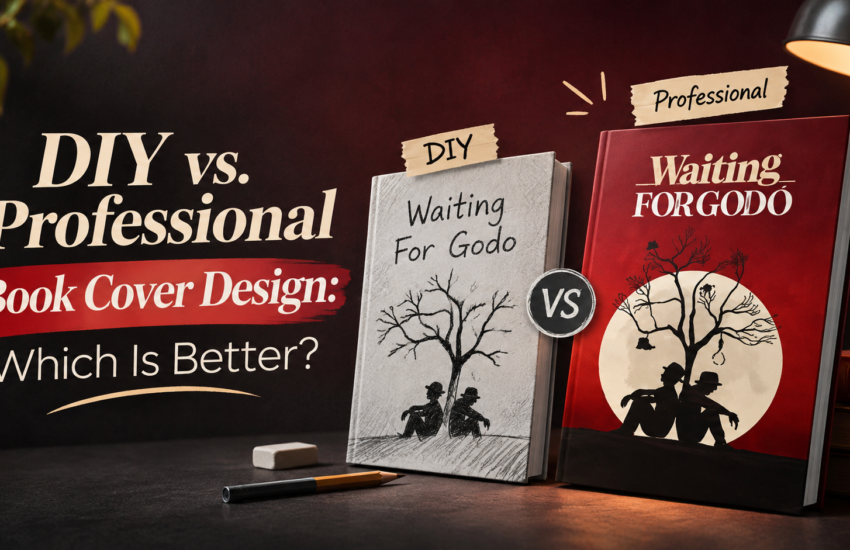
Self-publishing gives authors more control over their books, including the design and production process. Some authors choose to create their own covers using online design tools, while others hire professional book cover designers.
Both approaches have advantages, but the right choice depends on your skills, budget, publishing goals, and the complexity of your book.
Let’s compare DIY and professional book cover design.
1. What Is DIY Book Cover Design?
DIY book cover design means creating your own cover using graphic design software or online tools.
Many platforms offer templates, fonts, stock images, and editing features that allow authors to produce a basic design without hiring a designer.
Advantages of DIY Design
- Greater control over the creative process
- Ability to make changes independently
- No separate designer fee
- Useful for learning basic design skills
Limitations of DIY Design
Creating an attractive cover requires more than placing a title over an image. Typography, color theory, visual hierarchy, and composition all influence the final result.
Authors without design experience may struggle to create a cover that looks polished and fits their genre.
2. What Is Professional Book Cover Design?
Professional book cover design involves working with a designer who develops a visual concept around your book.
The process may include research, concept development, typography selection, custom artwork, revisions, and final file preparation.
Advantages of Professional Design
- Genre-focused creative direction
- Custom visual concepts
- Professional typography and composition
- Better understanding of publishing specifications
- Support with print and digital formats
The exact services depend on the designer and project agreement, so authors should always confirm what is included.
3. Comparing Both Approaches
| Factor | DIY Design | Professional Design |
|---|---|---|
| Creative control | Direct author control | Collaborative |
| Design experience | Depends on author | Provided by designer |
| Custom artwork | Limited by skills and tools | Can be commissioned |
| Technical preparation | Author’s responsibility | May be included |
| Revisions | Made independently | Based on agreed terms |
| Cost structure | Tools and asset costs | Designer’s service fee |
4. When Should You Choose DIY Design?
DIY design may be suitable if you have graphic design experience, understand publishing specifications, and can create a visually effective cover.
It can also work for personal projects or books with simple design requirements.
However, test the finished cover carefully at thumbnail size and check the final file against the printer or publishing platform’s specifications.
5. When Should You Hire a Professional?
Professional design may be the better option if:
- You want custom illustrations or artwork.
- Your book requires a distinctive visual identity.
- You are unfamiliar with print formatting.
- You want a genre-focused design.
- You prefer expert guidance during the creative process.
A professional designer can help translate your ideas into a complete visual presentation.
6. What Should Authors Consider Before Deciding?
Think about the importance of the cover within your overall publishing plan.
Your decision should account for your available budget, design skills, intended audience, distribution format, and timeline.
The goal is not simply to spend more or less. It is to produce a cover that accurately represents your book and meets the requirements of your publishing format.
Final Thoughts
DIY and professional book cover design both have a place in self-publishing. The best choice depends on your experience, expectations, and publishing needs.
If you want a custom-designed cover created with professional support, explore Publishing Republic’s Book Cover Design Services.
